





Known as the “Olympics of the art world”, the Venice Biennale has long functioned as one of the most important stages on which countries project cultural influence. This year, amid the collapse of the Biennale’s traditional Golden Lion awards structure, the deeper dynamics surrounding cultural influence came more sharply into view. What increasingly matters extends far beyond the awards themselves. The real contest lies in whether a country can use the Biennale to create resonance and connection across geography, culture and identity.
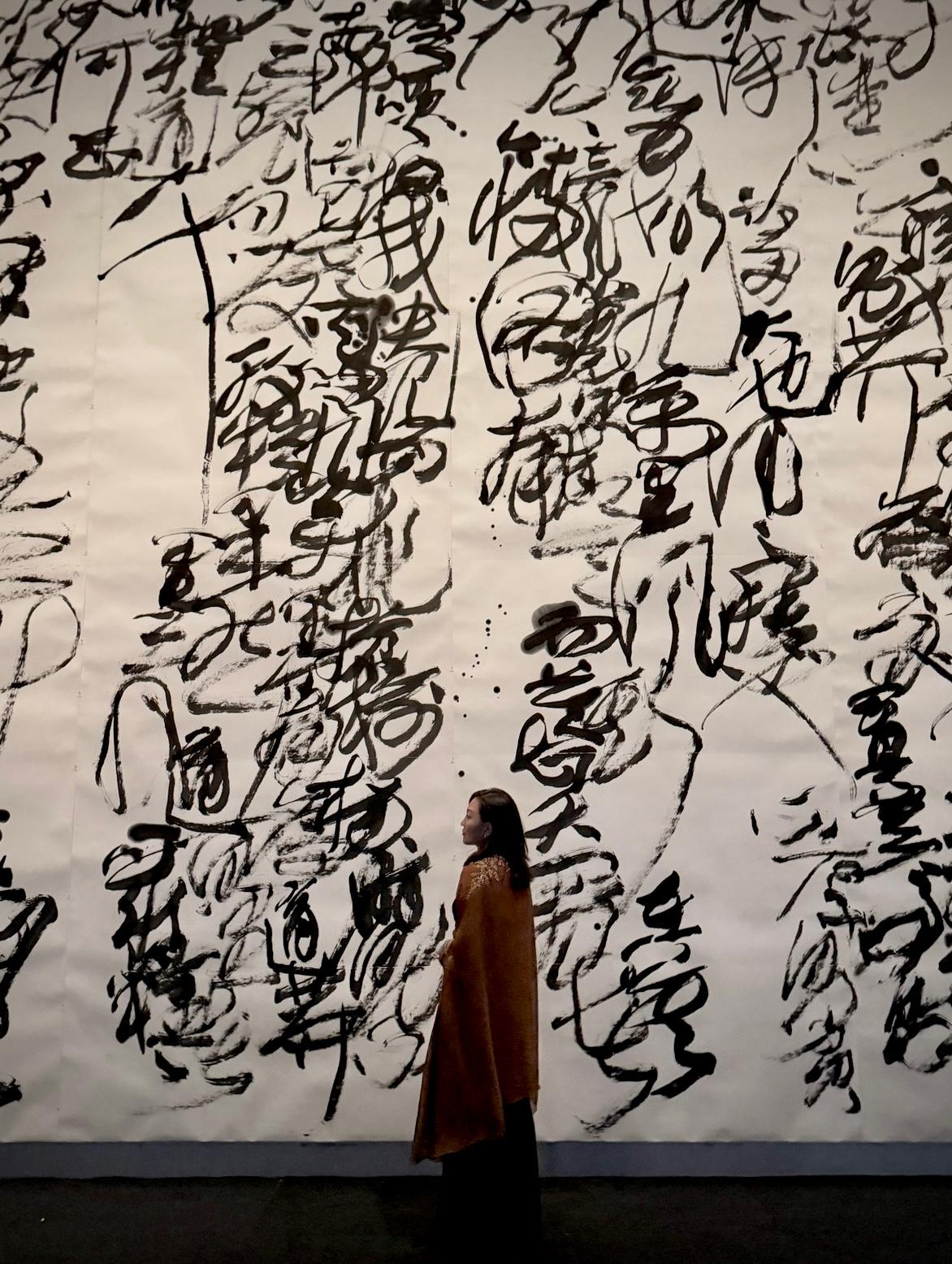
Chinese Pavilion
In Venice, success is measured not through official spectacle or grand opening speeches, nor through publicity campaigns aimed primarily at domestic audiences, but through whether a country can generate genuine recognition through strong curating; whether it understands the operating logic of the international art world; and whether it can mobilise influential individuals, institutions and cultural networks into meaningful participation, thereby attracting the attention of major museums, international media and social platforms. State support is important in shaping this ecosystem, but it is rarely the whole story.
India attracted significant attention and spontaneous positive discussion among art world insiders at this year’s Biennale, due in part to the backing of the Ambani family, alongside the coordinated efforts of major Indian collectors and cultural patrons through parallel projects.
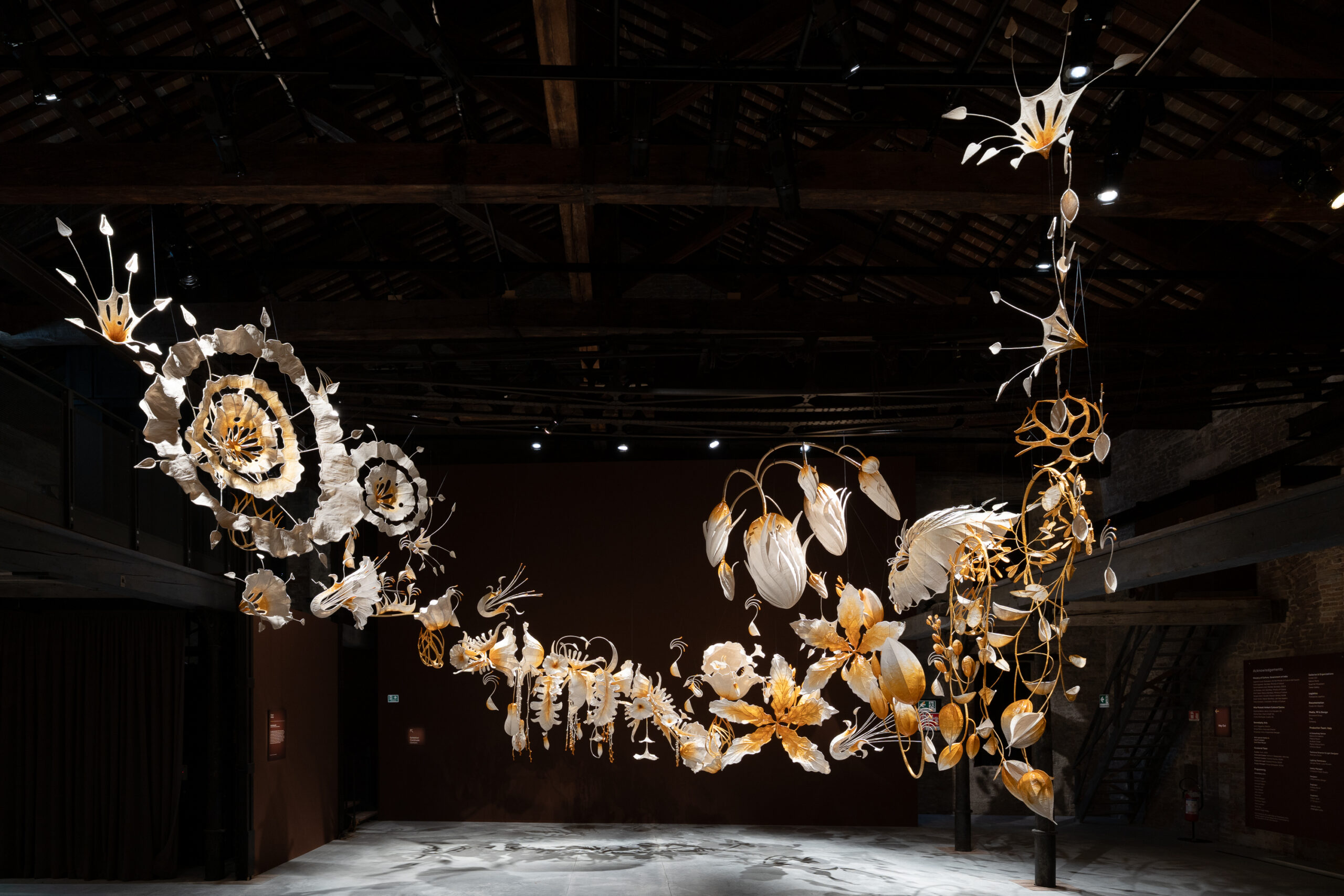
Ranjani Shettar, Under the Same Sky, India Pavilion. Copyright: Joe Habben
Alongside India’s Ministry of Culture, the Nita Mukesh Ambani Cultural Centre (NMACC), founded by India’s richest family, and the cultural organisation Serendipity Arts participated as partners in the Indian Pavilion. NMACC hosted an exclusive dinner during Biennale week attended by museum directors, fashion designers, internationally recognised artists and influential cultural figures, while Serendipity Arts presented dance, poetry and performance programmes that expanded the presentation of Indian culture beyond contemporary art alone.
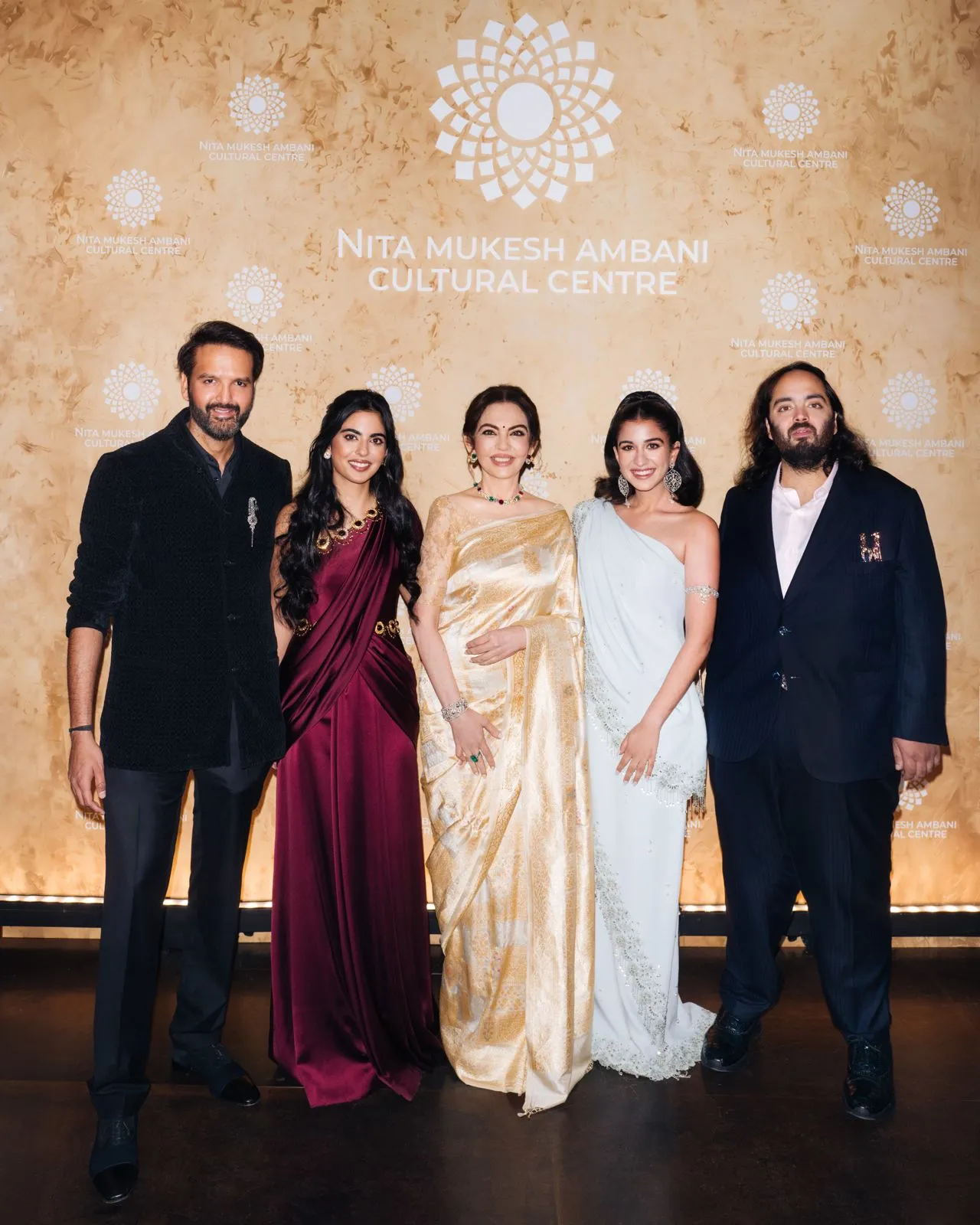
Dinner hosted by India’s Ambani family in Venice. Photograph: Saskia Lawaks. Image source: Vogue
Delhi based mega collector Kiran Nadar’s museum launched the Biennale parallel exhibition Nalini Malani: Of Woman Born, while also hosting a major celebration for her seventy fifth birthday during the opening week. Meanwhile, patron Pooja Singhal presented From India, to Venice at Palazzo Barbaro, bringing the four hundred year old Pichwai painting tradition of Rajasthan to Venice through works that incorporated the city’s canals and skyline into traditional Nathdwara visual systems.
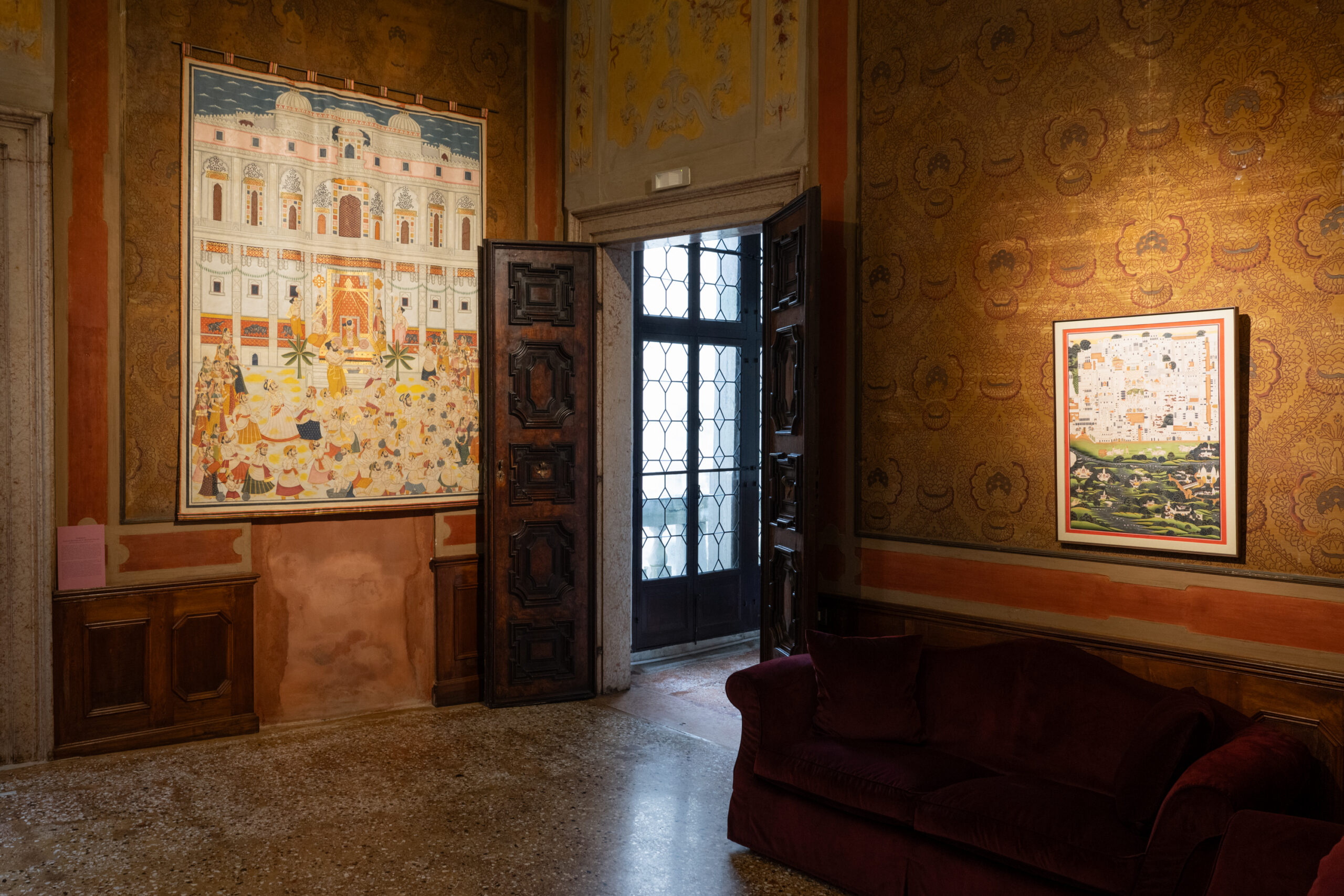
From India to Venice Pichwai. Photograph by Casey Kelbaugh / CKA
To a large extent, the art world remains deeply dependent on relationships and networks accumulated over time, making the importance of personal influence and social ecosystems self-evident. Beyond the role played by patrons, the Indian Pavilion’s curator, Amin Jaffer, also played an important role. The pavilion’s curatorial language and exhibition design felt notably assured. Rather than relying on grand narratives, the exhibition centred on the idea of “home”, exploring migration, displacement and identity through works that carried the histories of Indian civilisation and labour while also suggesting continuity across geography and time.
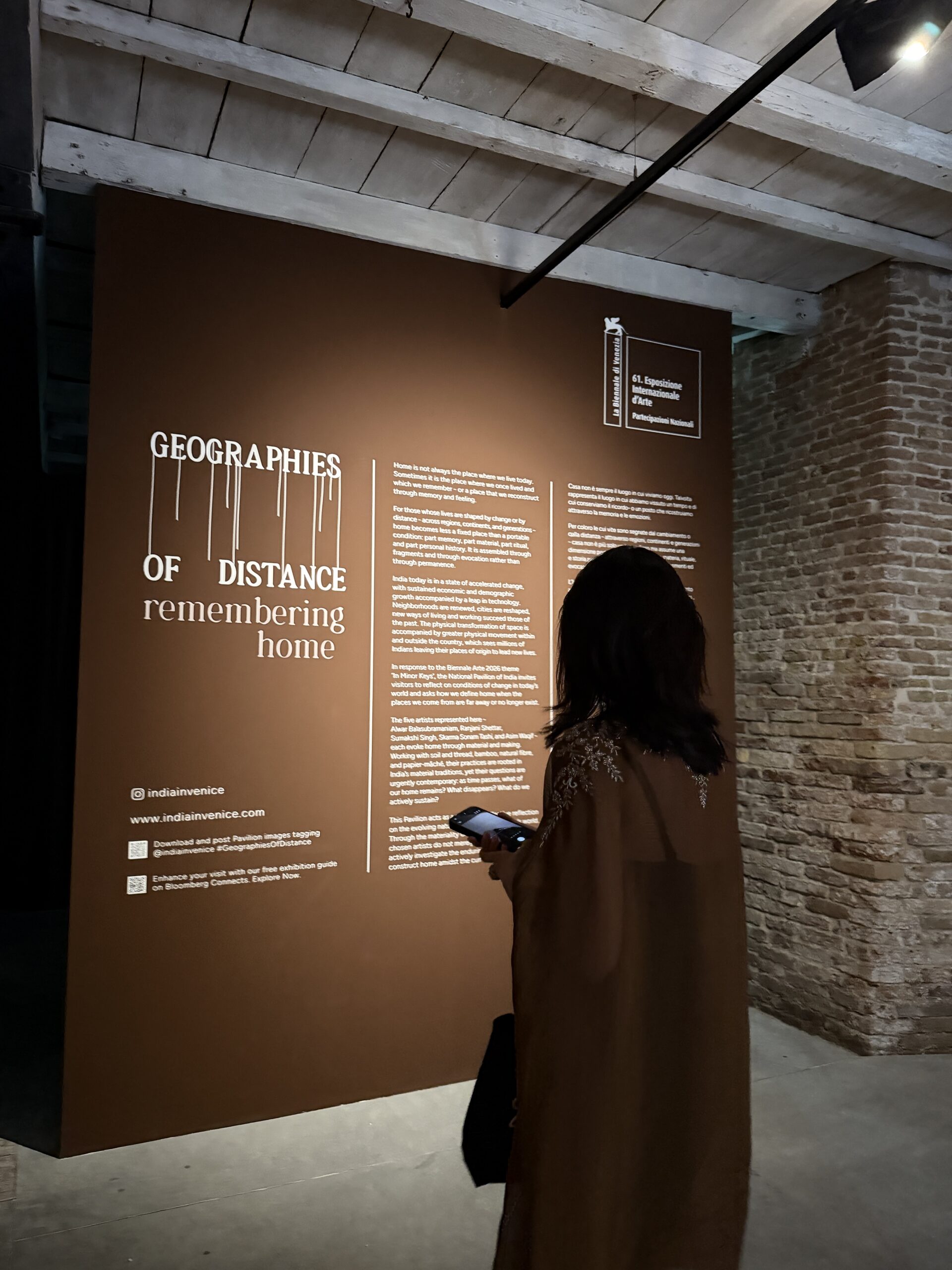
India Pavilion. Photograph: Lisa Chen
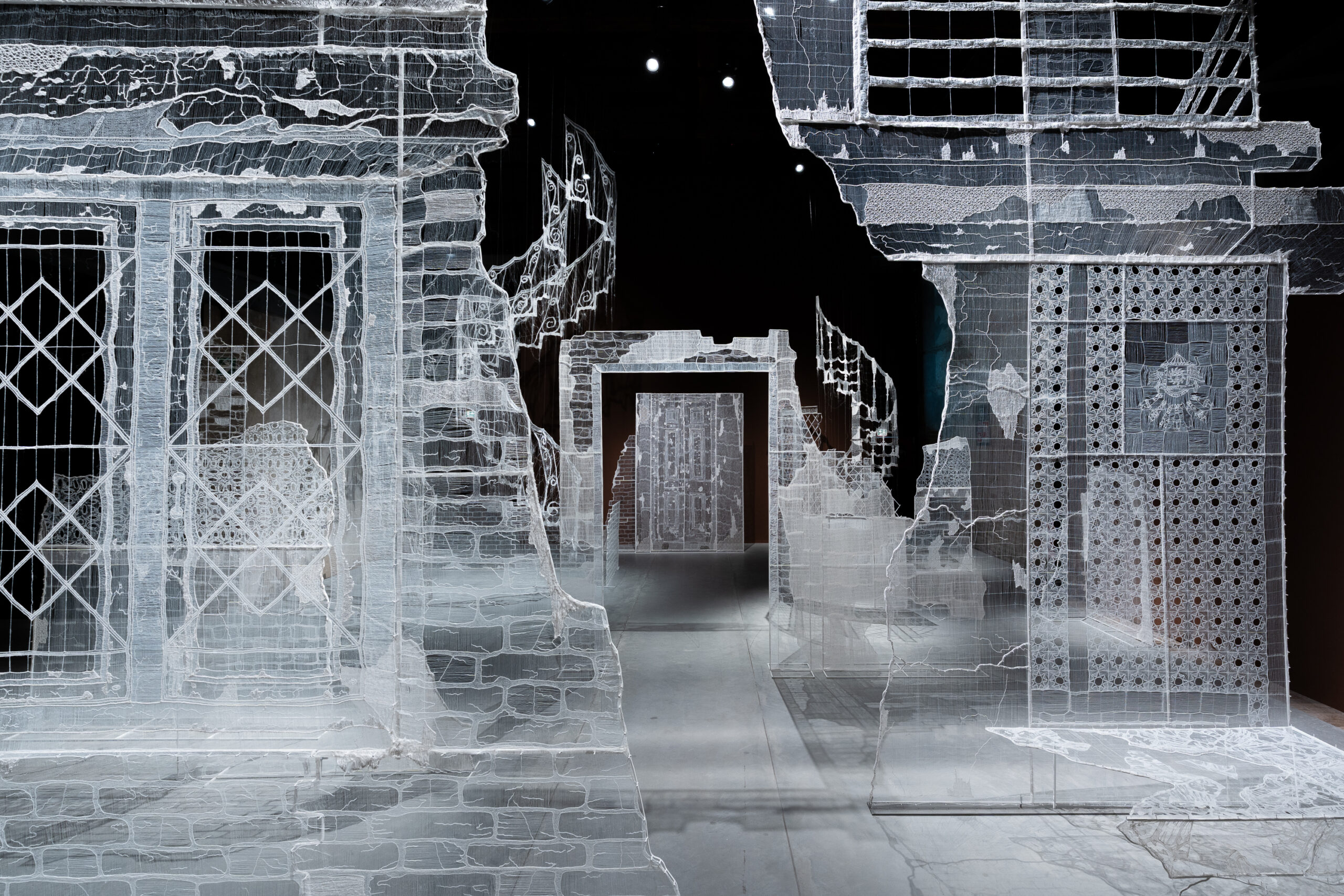
Sumakshi Singh, Permanent Address, India Pavilion. Copyright: Joe Habben
Jaffer has long occupied a prominent position within major international cultural institutions. Formerly a curator at the Victoria and Albert Museum and International Director of Asian Art at Christie’s, he now oversees the Al Thani Collection established by Sheikh Hamad bin Abdullah Al Thani. Over the past two decades, his curatorial practice has consistently focused on cross civilisational dialogue, building a network spanning Europe, the Middle East and Asia.
India’s visibility at this year’s Biennale therefore did not emerge solely from the national pavilion itself, but from the combined force of state institutions, private capital, collectors, patrons and international cultural networks.
This model is far from unique to India. During the Biennale, many national pavilions organise parallel exhibitions, dinners and social events in collaboration with galleries, foundations, collectors and institutions in order to attract the attention of curators, collectors and the international press.
The Lebanese Pavilion offered another representative example. Behind artist Nabil Nahas’s large-scale installation stood the support of private foundations, collectors and galleries. During the opening week, the pavilion was reportedly almost impossible to enter because of the crowds. According to William Lawrie, co-founder of Dubai based gallery Lawrie Shabibi, this momentum was shaped not simply by state support, but by the cultural community and international networks Lebanon has built over decades. Lebanese society, he noted, possesses a particularly strong instinct to protect and project its culture across art, music, literature and food alike.
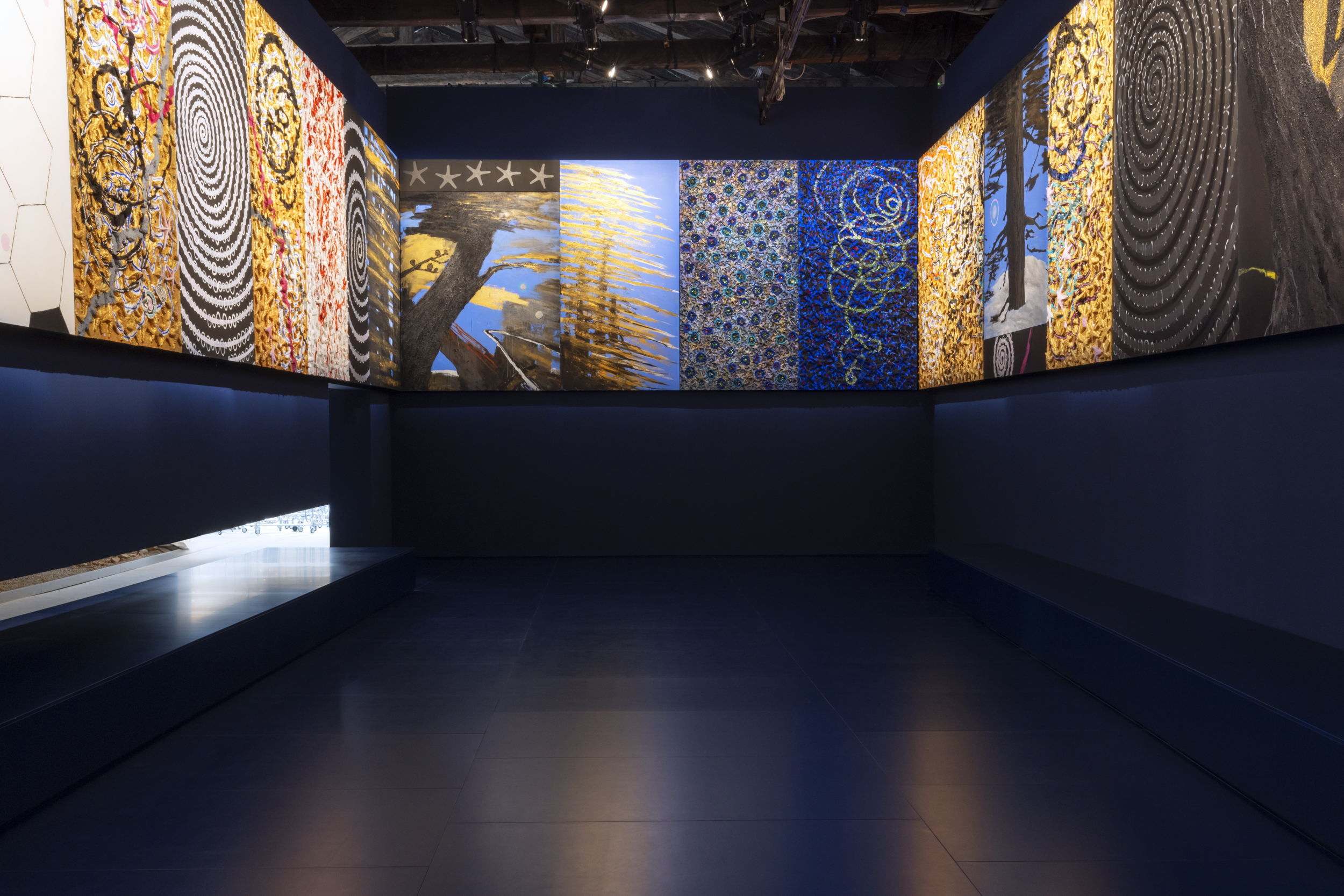
Nabil Nahas, Don’t Get Me Wrong, installation view. Lebanon Pavilion, 61st International Art Exhibition – La Biennale di Venezia, 2026. Courtesy of the artist & LVAA. Photograph: Celestia Studio © LVAA
This also reveals a broader structural reality. If a country’s cultural ecosystem suffers from a disconnect between state support and private patronage, particularly where collectors focus primarily on short term market returns rather than long term cultural influence, then cultural export can begin to feel hollow. Genuine cultural influence is rarely achieved through government power alone. It requires public institutions, private foundations, galleries, collectors, media and international networks to operate together as a coherent ecosystem.
Some countries possess relatively limited private patronage structures yet invest heavily in international cultural exchange while maintaining a remarkably open attitude towards collaboration. Uzbekistan is one such example.
At this year’s Biennale, the Uzbek Pavilion adopted a notably ambitious and innovative approach. Its exhibition, The Aural Sea, unfolded around the story of the Aral Sea, once one of the world’s largest inland lakes before its devastation through Soviet era irrigation policies. Significantly, the exhibition did not only include Uzbek artists, but also artists from China, Vietnam, the UK and elsewhere. Through installation, textiles, painting, sound and interactive works, the exhibition approached the Aral Sea as a living entity that still carries vitality.
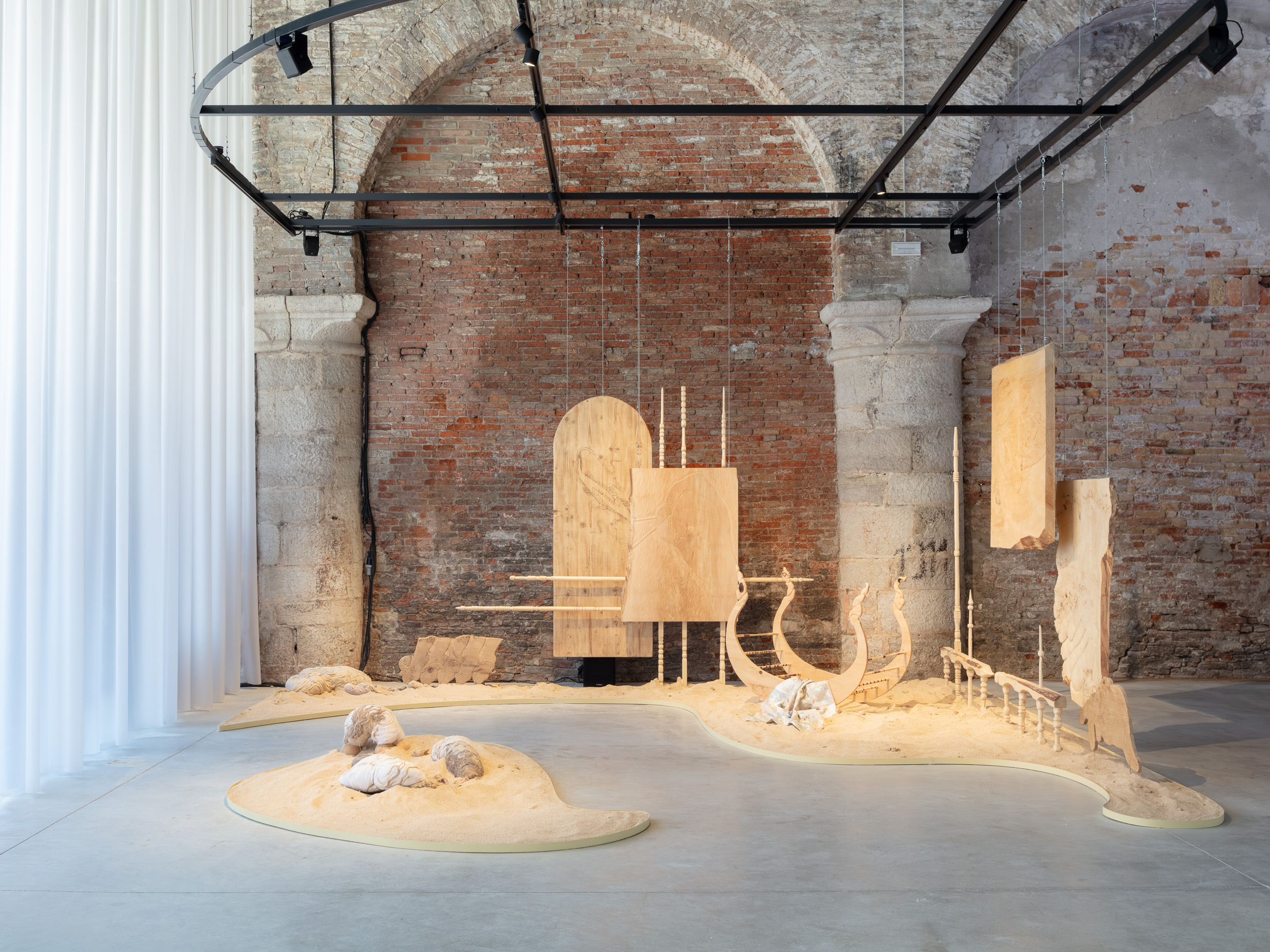
Zulfiya Spowart, Beshik (The Cradle), 2026. Installation view, The Aural Sea, Uzbekistan National Pavilion, 61st International Art Exhibition – La Biennale di Venezia, 2026. Photograph: Gerda Studio. Courtesy of the Uzbekistan Art and Culture Development Foundation.
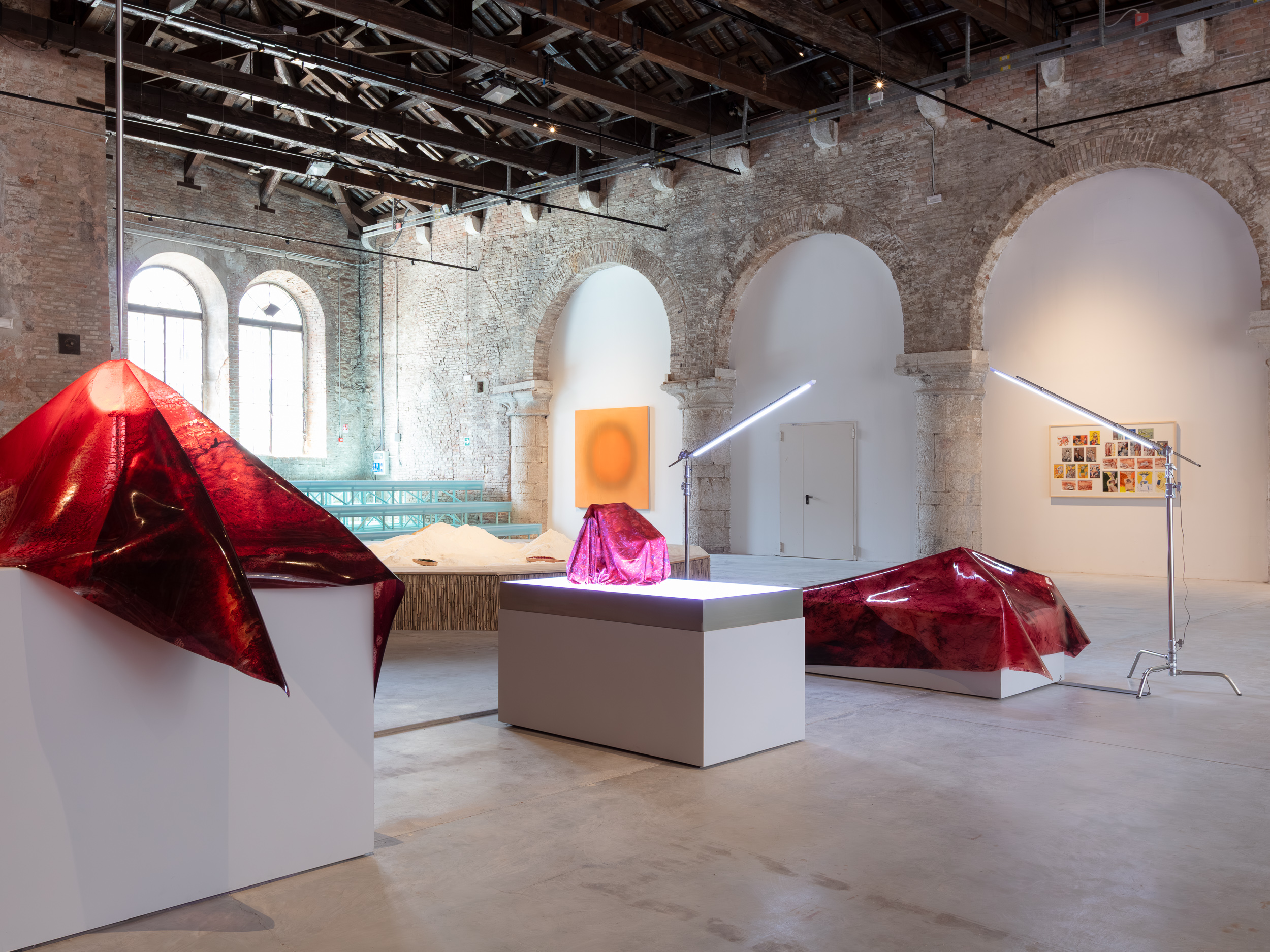
Nguyen Phuong Linh, Qi, 2026. Installation view, The Aural Sea, Uzbekistan National Pavilion, 61st International Art Exhibition – La Biennale di Venezia, 2026. Photograph: Gerda Studio. Courtesy of the Uzbekistan Art and Culture Development Foundation.
Chinese artist Xin Liu presented installations using recycled plastics and enzyme reactions that slowly decomposed over the course of the Biennale itself, prompting reflections on ecological crisis and material circulation.
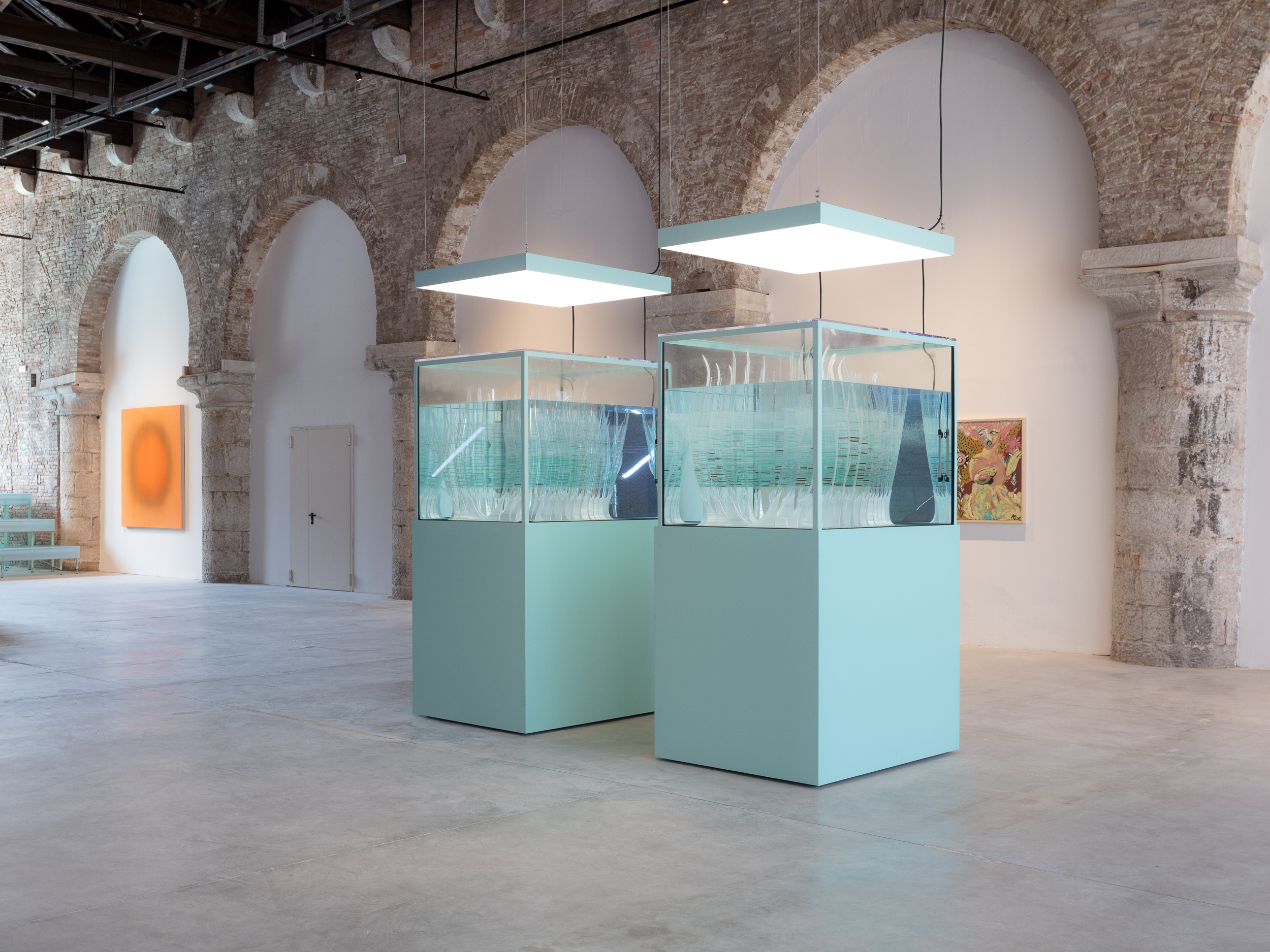
Xin Liu, The Permanent and the Insatiable: Born to Sea, 2026. Installation view, The Aural Sea, Uzbekistan National Pavilion, 61st International Art Exhibition – La Biennale di Venezia, 2026. Photograph: Gerda Studio. Courtesy of the Uzbekistan Art and Culture Development Foundation.
The cultural mechanism behind the pavilion is perhaps even more interesting than the exhibition itself. The project was commissioned by Gayane Umerova, chair of the Art and Culture Development Foundation (ACDF), whose approach feels unusually international and future oriented. Rather than appointing an established “star curator”, the pavilion entrusted its curatorial direction to several curators under the age of thirty from Central Asia and wider Asia, all of whom emerged from the Bukhara Biennial Curatorial School launched by ACDF.
In my conversation with Gayane Umerova, she explained that Uzbekistan’s unusually young demographic structure has shaped ACDF’s long-term priorities. Rather than pursuing short-term visibility, the foundation is focused on “building a cultural infrastructure that creates real opportunities both within and outside Uzbekistan”. She also emphasised that international collaboration should not merely function as an exchange of resources, but as a genuine process of co-creation. Describing a recent collaboration between Antony Gormley, artist Temur Jumaev and traditional brickmakers in Bukhara, she said: “The world came to Bukhara and made something that could only exist there, with those people.”
Over the past several years, Uzbekistan has gradually been constructing a more open cultural ecosystem through biennials, curatorial education, international residencies and cross-border collaborations spanning art and design. To a certain extent, this model moves beyond one-directional cultural export. Instead, by steadily generating new connections, talent and mechanisms for dialogue, it is allowing Central Asia to re-enter broader international cultural conversations.
When it comes to my own country, China’s presentation has often remained somewhat overlooked by international audiences. What became visible at this year’s Chinese Pavilion was perhaps not a lack of artistic talent, but a structural reality fundamentally different from that of many other national pavilions.
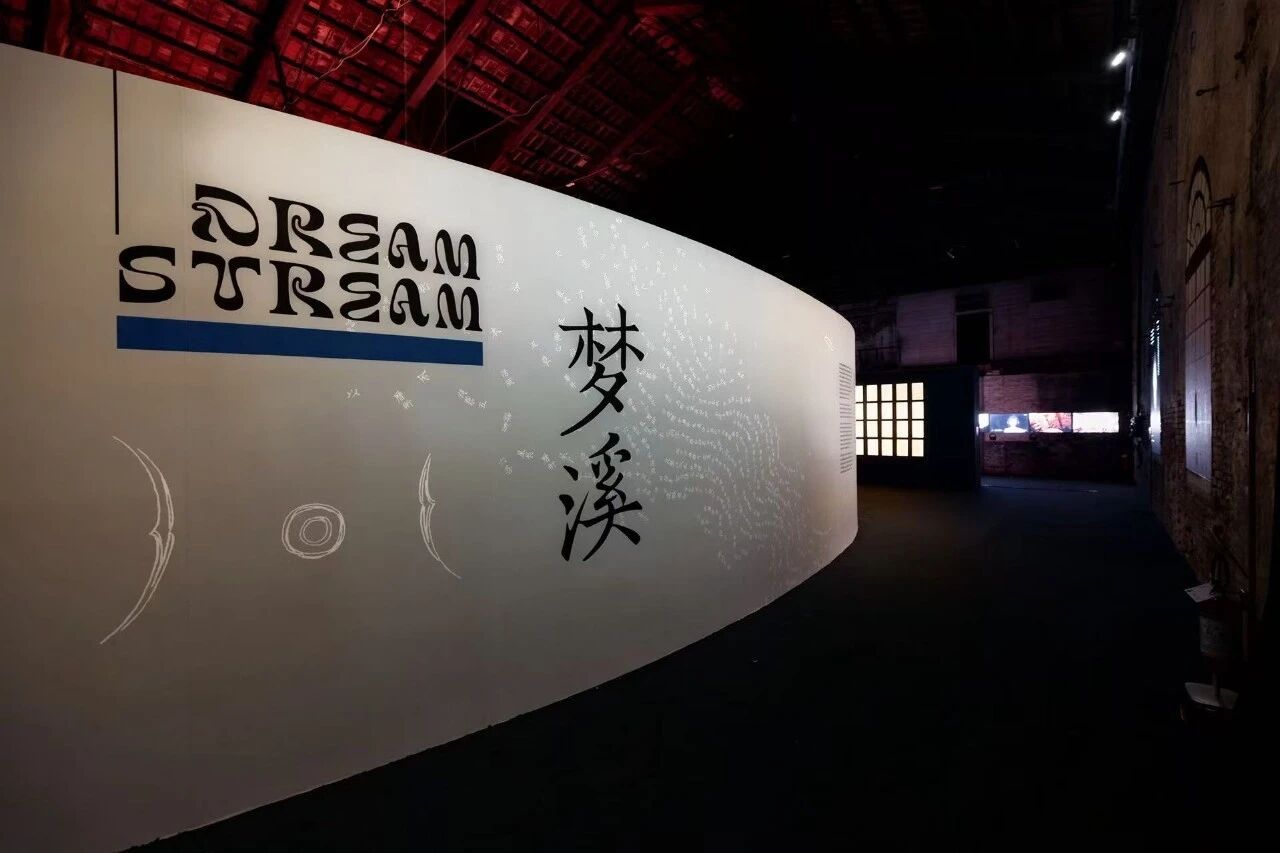
Main visual for the China Pavilion, 61st International Art Exhibition – La Biennale di Venezia. Image copyright: China Academy of Art. Photograph: Tang Jingzhi
The exhibition explored the relationship between technology, artificial intelligence and contemporary society through large-scale multimedia installations and digitally driven works. It was organised within a system still largely shaped by state academies and top-down cultural representation. This was reflected not necessarily in the quality of the works themselves, many of which demonstrated considerable creativity, but in a curatorial framework that at times appeared overly shaped by institutional logic and a desire to respond to international expectations.
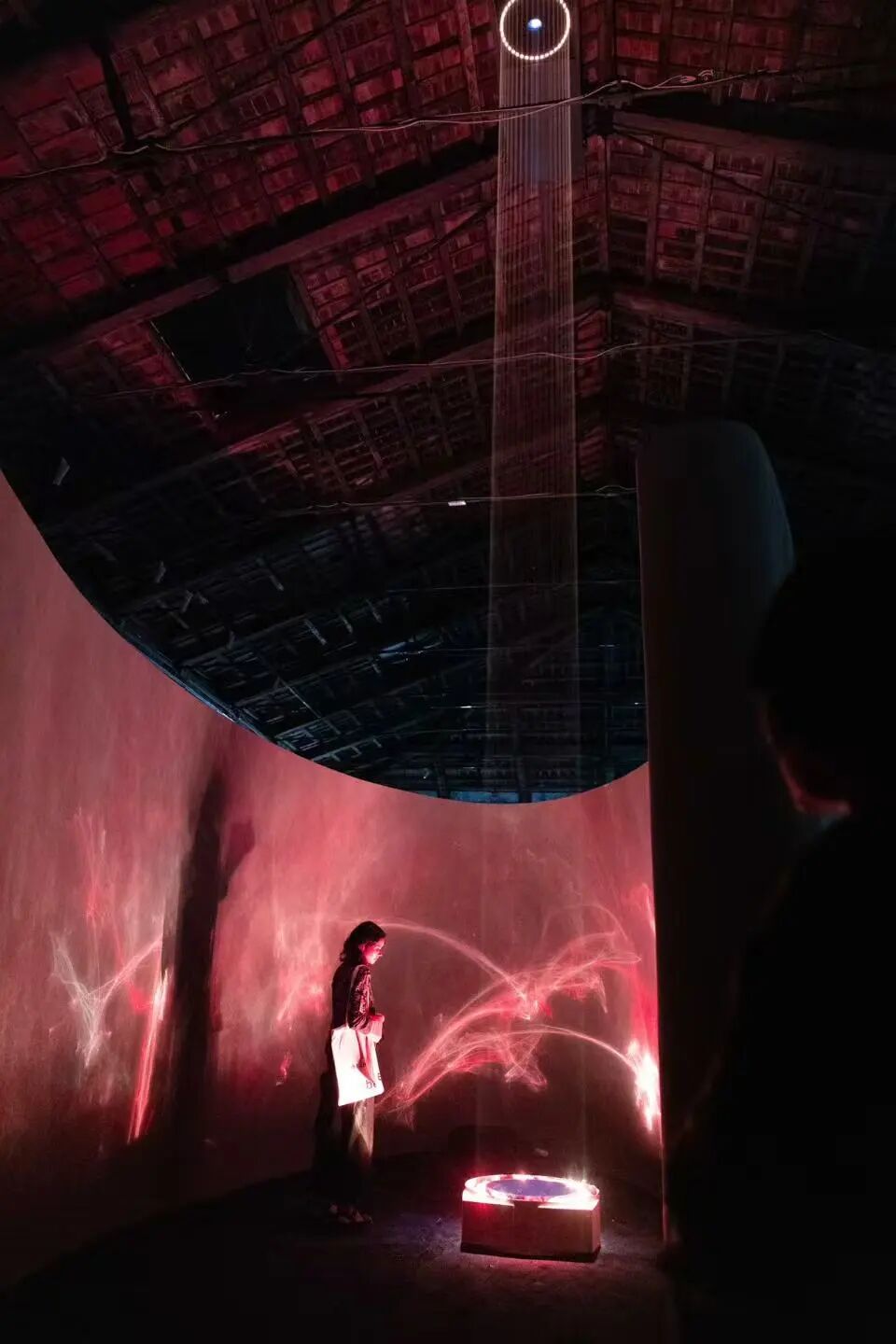
Liangzhu Highlight, by the China Academy of Art (Zheng Jing Studio + Wu Junyong) and Zhijiang Laboratory joint team. Image copyright: © China Academy of Art. Photograph: Tang Jingzhi
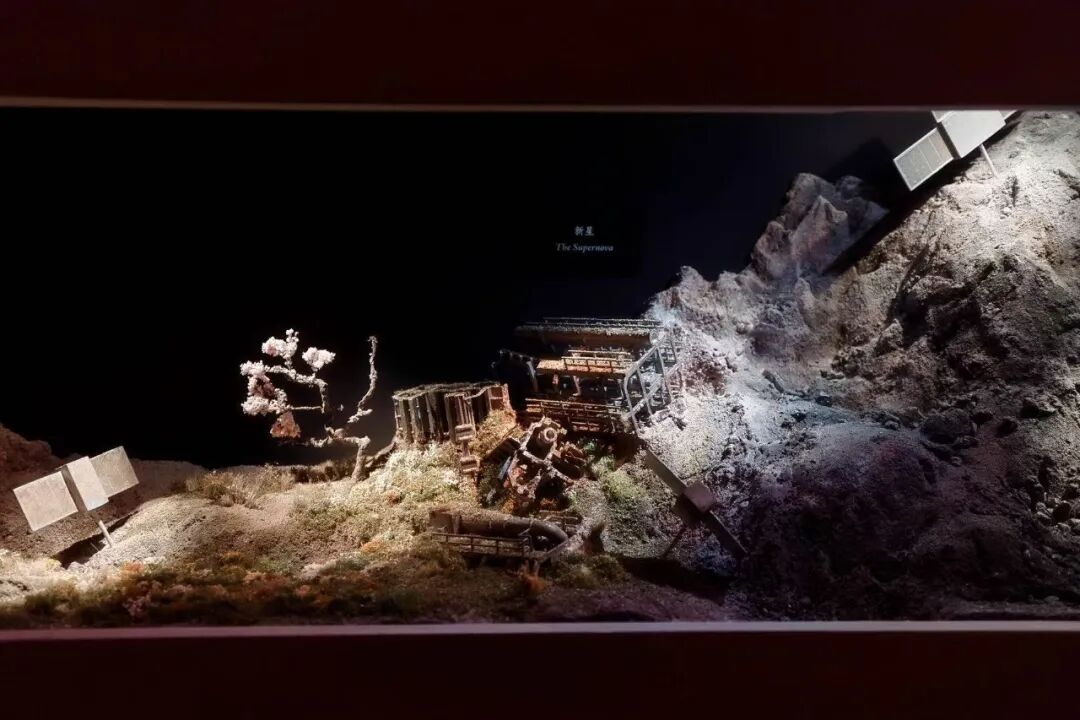
Shen Guo 2027, by the Narrative Engineering Team (Mou Sen, Ma Yuanchi, Xin Ge, Zhao Huodan, Mei Yuezhi). Image copyright: China Academy of Art. Photograph: Tang Jingzhi
Unlike many countries where national pavilions emerge through collaborations between curators, private foundations, collectors, independent cultural networks and public institutions, China’s official cultural presentation abroad continues to reflect a more divided ecosystem. As a result, many of the country’s most internationally engaged curators, artists and contemporary cultural voices remain relatively absent from its official platforms.
This disconnect feels particularly striking because contemporary China itself is far more culturally dynamic than its international presentation often suggests. The country possesses a remarkable number of significant artists, curators, designers and cultural producers, alongside collectors with substantial influence. Yet when presenting its cultural identity abroad, China can sometimes appear unable to fully convey the depth and complexity of its own contemporary cultural life.
This is not simply a question of outward-facing connection, but also of deeper structural divisions: the divide between state and private cultural power, and the distance between those responsible for officially presenting Chinese culture and the far more vivid creative activity unfolding across contemporary China itself.
Many people committed to serious cultural production in China continue to feel constrained by these long-standing structural conditions, making sustained cultural collaboration and, in turn, more resonant international cultural influence difficult to achieve.
Text: Luning
Copyedit: Rosie Fitter
The Chinese edition is published on Financial Times China